System Model
MPCP models machine payments as a cryptographic authorization chain that sits above settlement rails.
Overview
The system model has three layers:
| Layer | Role | Examples |
|---|---|---|
| Policy | Defines spending rules | Fleet operator policy, vendor allowlists, caps |
| Authorization | Bounds runtime spending | PolicyGrant, SBA |
| Settlement | Executes payment | XRPL (MPCP v1.0) |
MPCP operates in the authorization layer. It does not replace or implement the settlement layer—it constrains what may be settled.
The canonical flow is: PolicyGrant → SignedBudgetAuthorization (SBA) → Trust Gateway → XRPL Settlement.
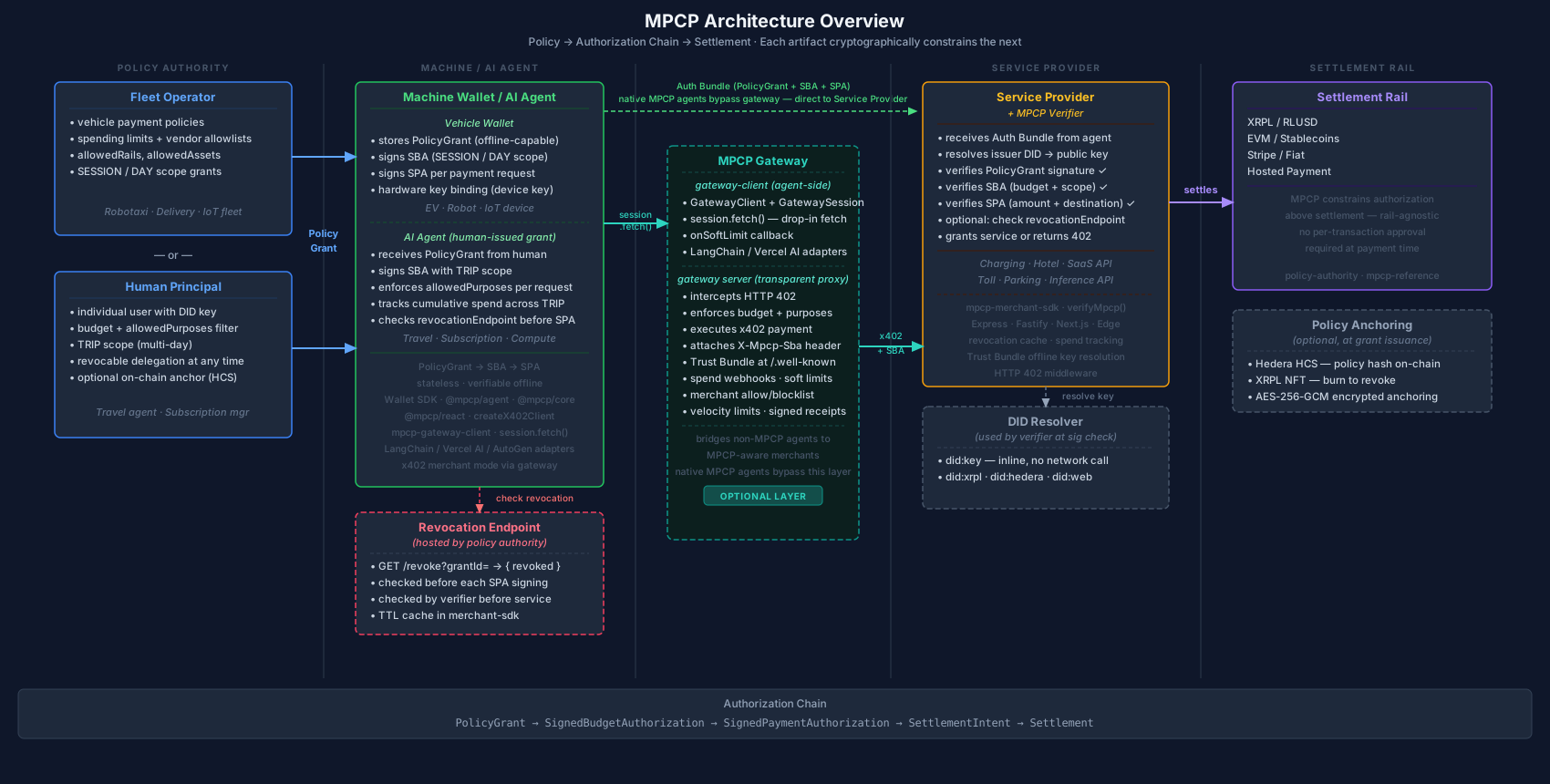
→ Authorization Chain (visual diagram)
Trust Model
- Policy issuer — Authority that defines rules (fleet operator, service operator)
- Machine wallet — Signs SBAs within policy bounds
- Trust Gateway — Verifies the authorization chain, enforces the PA-signed budget ceiling, submits XRPL payment
- Verifier — Validates the chain before allowing service or settlement
- Settlement rail — Executes the actual payment (XRPL in v1.0)
Each step produces verifiable artifacts. The verifier can independently validate the full chain without trusting any single party.
Key Properties
- Decoupled — Policy, budget, and settlement are separate concerns
- Verifiable — Settlement can be checked against authorization chain; on-chain via
mpcp/grant-idmemo - Offline-capable — Machine holds chain onboard; offline merchants verify locally via Trust Bundle
- XRPL-only (v1.0) — Conforming deployments use XRPL escrow + XRPL assets (e.g. RLUSD IOU); future spec revisions may register additional rails
See Also
- Authorization Chain — The canonical visual diagram
- Actors
- Artifact Lifecycle
- Reference Flow